
A sound B2B outbound cadence is about six touches over roughly four weeks: tight spacing early, wider gaps later, one channel beyond email, and a clear stop followed by a cooling-off pause before re-entry. Fit and relevance matter more than frequency, so fix the list and the message before tuning the gaps.
An outbound cadence is the planned sequence of touches sent to one prospect, with set gaps between them. Most debates about B2B email programs are really operations debates. Teams ask how often to send when they should ask who enters the sequence, what each touch says, and what gets measured.
I've spent 15 years in B2B marketing, working with more than 250 companies. This guide gives SDR managers a starting structure for touches, gaps and stop rules, and shows how to tell whether the cadence is earning pipeline.
What does a good outbound cadence look like?
A good outbound cadence has a fixed number of touches, closer together at the start and wider apart later, spread over about a month. It mixes email with one other channel, ends with a clear stop, and runs only on accounts that fit your ICP.
Four parts define the shape of any outbound cadence B2B teams run:
- Phases. A tight opening run, then a slower second half.
- Channel mix. Email carries the volume, and one other channel adds a human touch.
- Stop rule. The sequence ends. It doesn't trail off into endless "just checking in" messages.
- Re-entry. A prospect comes back only after a cooling-off period and with a new reason to write.
What touch frequency should B2B outreach use?
Start with six touches in roughly four weeks. Space the first three a few days apart, then widen to about a week. Treat this as a starting structure, then adjust from your own reply and meeting data rather than copying anyone's benchmark.
Here is the structure, one touch at a time:
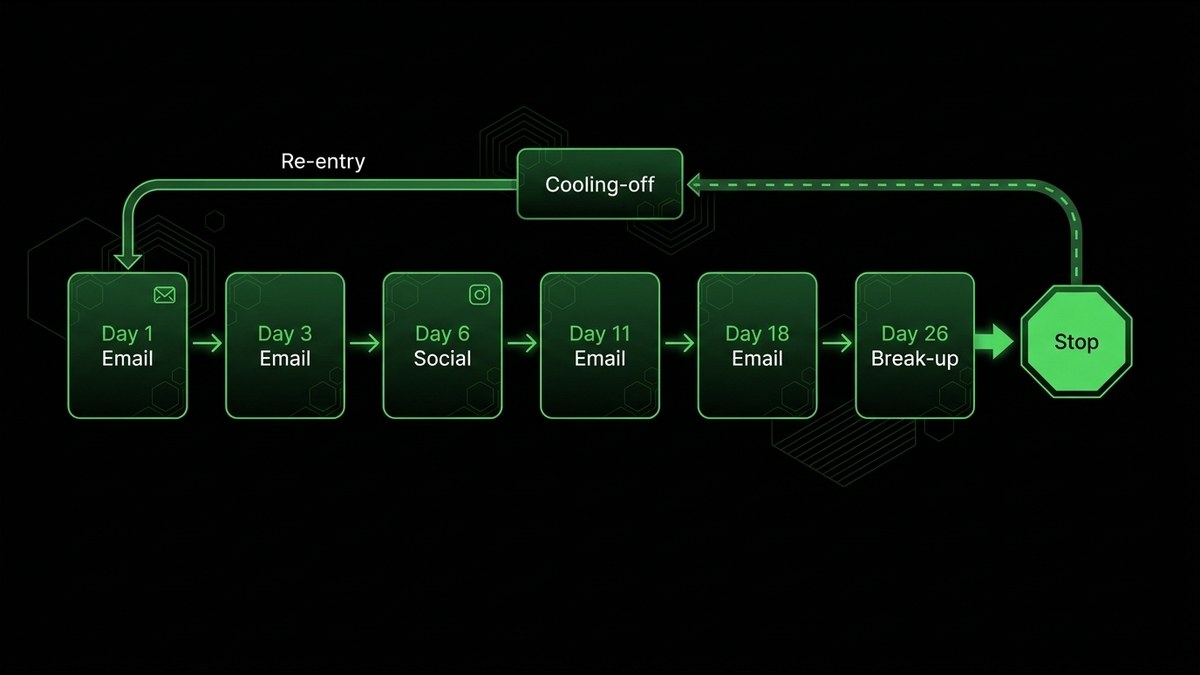
- Touch 1 (day 1). Email with a pain-led opener and one specific observation about the account.
- Touch 2 (day 3). Short email with a new angle. It's not a "bump."
- Touch 3 (day 6). A second channel, such as LinkedIn. Keep it light and human.
- Touch 4 (day 11). Email with case-study or system-led framing.
- Touch 5 (day 18). Email to the same person with a different stakeholder angle, or a useful resource.
- Touch 6 (day 26). A clean break-up email, then stop.
- After. A cooling-off period set by your sales cycle. Re-enter only with a new reason to write.
Why does the spacing work this way?
Early on, the first note is still fresh, so tight spacing keeps the thread alive. Later, wider gaps stop the sequence from reading as pressure. The cadence B2B buyers tolerate is a structure to test, not a benchmark. Your sales cycle and your buyers will move the numbers.
Each touch needs a job. Messaging should be persona- and industry-specific, pain-led and non-assumptive. If a touch has no job, cut it.
Reps who improvise spacing also make results impossible to compare. A fixed structure fixes that. It's also how we build email programs: wired into your CRM and measured against revenue.
Does email frequency matter more than list quality?
No. Frequency amplifies whatever the list and message already are. A poorly fit list sent more often only burns domains and goodwill faster. Fix list fit and relevance first, then tune spacing.
I know the objection: "My quota is a volume problem, so more touches, sent more often, is the answer." It feels logical, and it's the most common mistake I see in cadence design. Volume multiplies. If the list is wrong, you multiply the wrong thing. Reps burn through accounts that were never going to buy, and the domain pays for it.
So there is no single email frequency that is optimal for every list. A tight, well-fit list tolerates a firm early rhythm. A loose list does not tolerate it at all. Tighter spacing on a poor-fit list damages any outbound cadence, and it does so faster. That is why relevance beats sending volume.
Marketing doesn't have a lead generation problem. Most companies have an operations problem. A low-quality pipeline is usually an entry-criteria problem: who gets into the sequence, and on what evidence.
Some work has to happen before cadence, and a done-for-you cold email system builds it in first:
- Authentication. Your sending domains are set up so mailbox providers trust them.
- List hygiene. Bad addresses and poor-fit accounts are removed before they cost you.
- Sending reputation. It's protected by design, not repaired after a drop.
How should cadence change by persona and trigger?
One cadence for everyone is the mistake. Shorten the gap when a clear trigger exists, such as a hiring or funding signal, and keep it wider for cold lists with no signal. Senior buyers get fewer, sharper touches. Multi-thread across roles on staggered timelines, not the same day.
This is my operating view, not a study finding. A signal means the account has a reason to care now, so tighter early spacing is justified. A cold list has no such reason. It needs a gentler outbound rhythm and a stronger message.
Persona changes the rule too:
- Senior leaders. Fewer touches, each one short and specific to a business problem.
- Managers. More room for detail, such as a case example or a resource.
- Multi-threading. Reach marketing, revenue and executive leaders in the same account, staggered across days or weeks. Never put three reps in three inboxes on the same morning.
Separate tracks for signal and no signal
I've helped SaaS companies reduce CAC while improving lead quality through better operational alignment. The gain came from tighter entry rules and clearer handoffs, not from adding more touches. That's the same discipline you need here.
Adding more channels or touches rarely fixes growth. Better systems do. Set separate cadence tracks for triggered accounts and cold accounts, built on an outbound email sequences framework, then compare them on outcomes.
How do you know the cadence works?
Measure meetings booked and pipeline created per cadence, not opens. Opens are distorted by mail privacy features and say little about buying intent. Compare cadence variants on reply quality, meeting rate and pipeline influenced.
Most teams measure activity, such as touches sent, instead of outcomes. That's how a team ends up with a busy dashboard and a thin pipeline. We measure B2B email marketing to pipeline and revenue rather than opens. Across 70+ B2B teams over 15+ years, we've influenced $470M+, reported against pipeline, not vanity metrics.
Three habits make a cadence measurable:
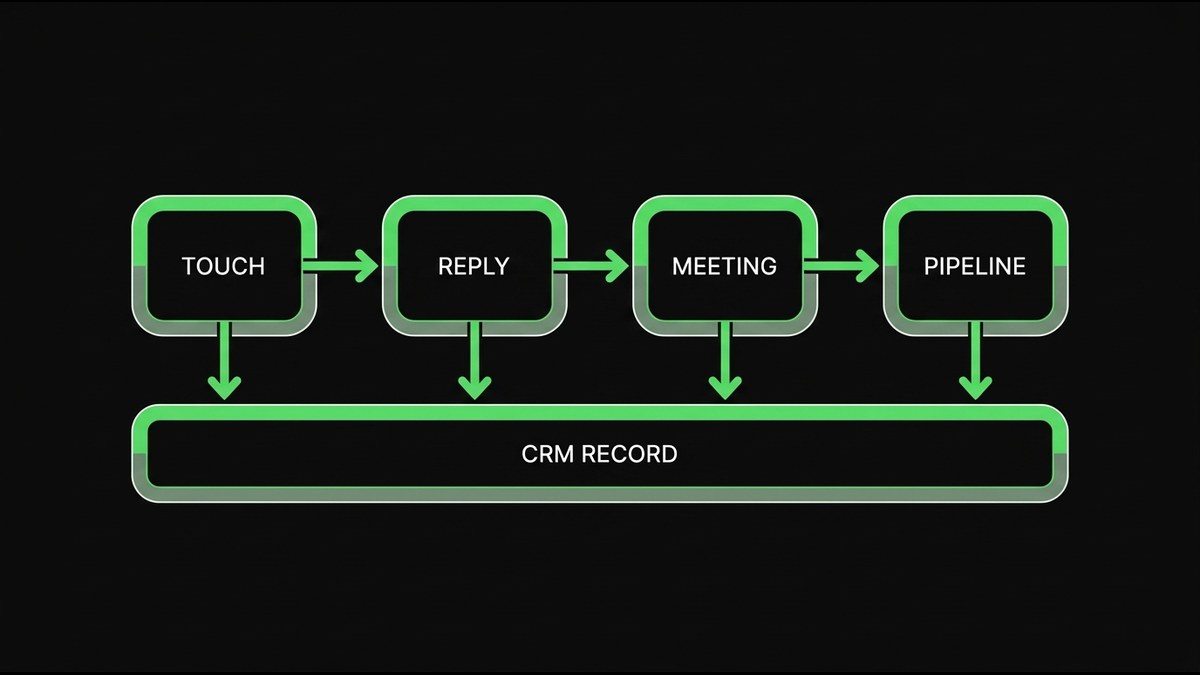
- Measure to meetings and pipeline. Every reply should carry a tag that survives into the CRM.
- Run one variable at a time. Change the gap, or the second channel, or the opener. Never all three.
- Wire handoff into the CRM. A reply that sits in a shared inbox can't be tied to revenue.
Structure before spend
Structure before spend is a pattern worth seeing in another channel. In one case, a platform rebuilt its program after paying too much for leads that rarely converted, and the fix was to repair the structure instead of adding budget. That was a paid-search case, not an email one, but the lesson carries over. Cadences should be judged the same way: on what they produce, not on how busy they look.
What are the three rules to keep?
An outbound cadence B2B teams can defend comes down to three rules:
If you want a second pair of eyes on your cadence and your list, we'll look at both as one system.
- Fit first. Only accounts that match your ICP enter, and setup work comes before spacing.
- Fixed structure. A set number of touches, early tightness, later gaps, one extra channel and a clear stop.
- Measure to pipeline. Meetings and pipeline decide what stays, not opens or touches sent.
- ✓ Define the shape (phases, channel mix, stop rule, re-entry) before you debate any single number.
- ✓ Fix the touch count and the gaps first, give every touch a job, and change one thing at a time.
- ✓ Tighter spacing on a poor list only damages your reputation faster, so fix the list and the setup before you touch the gaps.
- ✓ Build separate tracks for signal and no signal, give senior buyers fewer and sharper touches, and stagger every thread.
- ✓ Judge every cadence on meetings and pipeline, and keep replies connected to the CRM.
FAQ
How many touches should a B2B outbound cadence have?+
A sound starting point is six touches over about four weeks. Space the first three a few days apart, then widen to roughly a week, and end with a clean break-up email. Treat it as a structure to test and adjust from your own reply and meeting data.
Should an outbound cadence use channels other than email?+
Yes, but keep it to one additional channel. Email carries the volume, and a second channel such as LinkedIn adds a light, human touch around the third touch in the sequence.
Does sending more emails fix a weak pipeline?+
No. Frequency amplifies whatever the list and message already are. On a poorly fit list, more touches burn domains and goodwill faster. Fix who enters the sequence and what each touch says before tuning spacing.
How should cadence differ for triggered accounts and cold lists?+
Use tighter early spacing when a clear trigger exists, such as a hiring or funding signal, because the account has a reason to care now. Keep gaps wider for cold lists with no signal, and pair them with a stronger message.
How do you tell whether an outbound cadence is working?+
Measure meetings booked and pipeline created per cadence, not opens. Compare variants on reply quality, meeting rate and pipeline influenced, change one variable at a time, and make sure every reply is tagged and tracked in the CRM.
When can a prospect re-enter a sequence?+
Only after a cooling-off period set by your sales cycle, and only with a new reason to write. The sequence should end with a clear stop rather than trailing off into repeated check-ins.