
Cybersecurity MSP marketing works when it earns trust before it asks for a call. That means plain positioning of what you protect, compliance claims you can defend, proof that respects client confidentiality, and channels security buyers already trust, such as peers, referrals, analysts and search. Measure it by pipeline, not activity counts.
A security buyer reads your site looking for a reason not to trust you. Most cybersecurity MSP marketing gives them one.
Most MSPs and MSSPs we meet share the same pipeline shape. It depends on referrals and relationships, and marketing cannot show what it adds. The work in cybersecurity MSP marketing is to build one system, not four separate tasks.
How does cybersecurity MSP marketing earn trust?
Security buyers are trained skeptics. They trust peers and analysts over vendors, and they discount anything that reads like an ad. Persuasive copy comes second. You earn trust by being specific, claiming only what you can prove, and showing up where buyers already look.
Timing matters too. Buyers shortlist before they ever contact you. A go-to-market built around winning the evaluation call arrives after the decision that mattered. So the trust work has to happen earlier, in the places where the shortlist forms.
We treat this as a four-part system:
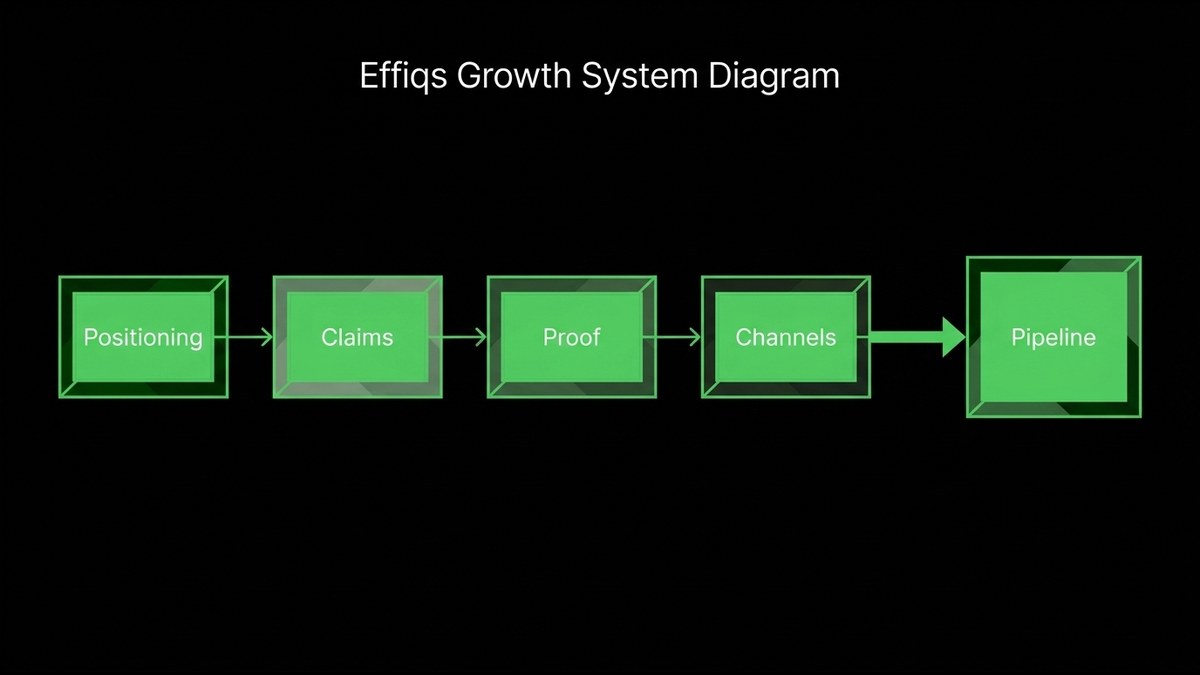
- Positioning. A plain statement of who you protect and what you run for them.
- Claims. Scoped statements about frameworks and services that a technical reviewer cannot knock down.
- Proof. Evidence that works without naming clients.
- Channels. A short list of places where security buyers already pay attention.
How do you position a cybersecurity MSP?
Start with the problem as the buyer sees it. "We do everything" is not a position. It tells a buyer nothing and gives a skeptic nothing to check.
State who you protect, from what, and what you run on their behalf, in plain words. Name the trigger that brings a buyer to you: an audit, an incident, a new cyber insurance requirement, or a client contract that now demands evidence of controls. A buyer who sees their own trigger on your page keeps reading.
Then cut. Most service pages list every tool the provider resells. Buyers do not shop by tool. They shop by outcome and by who will be accountable when something goes wrong. We suggest one sentence on what you run, one sentence on what stays with the client, and one named trigger per page. Service pages that explain managed security plainly are easier to defend in review and easier to rank.
A strategy contains a decision about why this and not something else. A list of channels and campaigns is only a plan. For an MSP, that decision usually means choosing a buyer, a trigger and a service line to lead with. Everything else follows.
We set positioning, offer architecture and funnel logic before any spend. The most expensive mistake in growth is executing on the wrong system fast. Diagnosis comes before delivery.
How do you make compliance claims without overpromising?
Compliance complexity is not what stalls most MSP marketing. Unscoped claims are. "We make you compliant" fails the first time a security engineer, an auditor or an insurer reads it.
Say exactly what you do for a framework and what stays with the client. Tie each claim to a service you deliver. For example, a claim about monitoring and evidence collection holds up. A claim about guaranteed certification does not. A precise, scoped claim survives review. A broad one fails it.
A simple test helps. For every compliance sentence on your site, ask three questions:
- Which service delivers this?
- What does the client still own?
- Could we show a reviewer how we do it?
Why do compliance topics matter for search and pipeline?
If you cannot answer all three questions for a compliance sentence, rewrite it or drop it.
Compliance topics also carry high intent. Buyers who search for a framework requirement are usually mid-decision, not browsing. Content built around those queries, backed by sound SEO and AEO foundations, meets them at the right moment. In our work with a regulated software platform, a redesign that paired a regulatory-grade brand with this kind of search infrastructure took the site from a limited footprint to page-1 visibility and a multiple of its earlier traffic. The lesson carries over to MSPs. Buyers evaluating vendors in regulated spaces find the providers whose content answers the exact question they typed.
For MSPs, frameworks such as HIPAA, CMMC and financial-sector requirements each bring their own vocabulary and their own reviewers. Only claim what you can scope.
What counts as proof without naming clients?
Security clients rarely allow logos, quotes or case studies with their name on them. Many MSPs stop there and publish nothing. That leaves buyers with only your word.
If references do not travel, explain precisely how the result was produced. Then the buyer can judge whether it transfers to their situation. Three moves do most of the work:
- Show the method, not the name. An anonymized outcome with the starting problem, the steps taken and what changed reads as evidence. A vague "client saw great results" does not.
- Borrow credibility. Partner programs, vendor certifications, review-site presence and analyst mentions all stand in for named references while you build them.
- Publish something checkable. Original data, a maturity checklist or a framework shows expertise without a customer list. A buyer can test it against their own environment.
How should proof be tied to pipeline?
It also helps to win a narrow beachhead. A tight vertical where you earn references quickly beats broad presence with none. A provider known for one regulated segment is easier to trust than one claiming every sector.
Proof has one more job. It has to show up in numbers your leadership trusts. Marketing leads answer for pipeline, so proof assets need tracking from first view to opportunity. Reporting that ties activity to pipeline shows which proof assets move buyers and which ones sit unread.
Which channels reach security buyers, and how do you measure them?
Most B2B teams run more channels than they can operate well, then wonder why none perform. Concentration beats coverage. Pick the few channels where security buyers already look, and run them properly.
Here is how we frame the main channels for cybersecurity MSP marketing:
- Referrals and partners. Buyers trust people they know. Formalize the program with named partners, clear handoffs and tracked sources. Measure referred opportunities and the revenue they produce.
- Search and AI answers. Buyers ask plain questions about frameworks, incidents and requirements. Content that answers them precisely gets found and gets cited. Measure visibility on target queries, then the pipeline those visits produce.
- Account-based outreach. A tight target list and tailored messages suit a market with a limited number of right-fit buyers. Measure engagement at account level and meetings that become opportunities.
- Peer-led channels. Review sites, communities, events and analyst relations carry weight because buyers do not see them as ads. Measure presence, then influenced and sourced pipeline.
How do you set up measurement before launch?
Pick the two or three channels that fit your buyer and trigger. Then agree on measurement before launch. The usual failure is a dashboard of impressions and clicks that cannot answer one question: what did marketing add to pipeline? Define sourced and influenced revenue up front, keep the definitions fixed, and review them quarterly. For account-based programs, set the metrics before spend begins.
Done well, this turns an unpredictable pipeline into one you can forecast, with revenue data your team trusts.
What should you do next?
Run the four-part check on your own cybersecurity MSP marketing before you spend more on it:
- Positioning. Can a stranger say who you protect and from what in one sentence?
- Claims. Does every compliance statement name the service behind it and the client's share?
- Proof. Could a skeptic check your evidence without a client name?
- Channels. Can you tie each active channel to pipeline?
What should you ask an outside marketing partner?
Wherever the answer to the four-part check is no, that is your first piece of work. It is also where diagnosis before delivery pays off. Executing on the wrong system quickly is the costliest mistake in growth.
If you are weighing an outside partner, ask how they will review security content for accuracy and how they will report on pipeline. Then ask about scope and cost, and look for fixed scope and clear reviews.
- ✓ Trust in cybersecurity MSP marketing is a system that buyers test at every step, not a tone of voice.
- ✓ One plain offer and one named buyer trigger beat a long list of services every time.
- ✓ A scoped compliance claim earns trust, and an unscoped one costs you the technical reviewer.
- ✓ Proof does not need a client name, but it does need a method a buyer can check and reporting that links it to pipeline.
- ✓ Fewer channels, each tied to sourced pipeline, show marketing's contribution more clearly than broad coverage.
FAQ
What is cybersecurity MSP marketing?+
Cybersecurity MSP marketing is the work of earning trust from security buyers before asking for a call. It combines plain positioning, defensible compliance claims, proof that respects client confidentiality, and a short list of channels such as referrals, search, account-based outreach and peer-led platforms, all measured by pipeline.
How can an MSP make compliance claims without overpromising?+
Scope every claim to a service you deliver and state what the client still owns. For each compliance sentence, ask which service delivers it, what the client owns, and whether you could show a reviewer how you do it. If you cannot answer all three, rewrite or remove the sentence.
How can a cybersecurity MSP show proof when clients will not allow case studies?+
Explain how results were produced instead of who received them. Publish anonymized outcomes with the starting problem, steps and change, borrow credibility from partner programs, certifications, review sites and analyst mentions, and publish checkable assets such as original data, maturity checklists or frameworks.
Which marketing channels work best for cybersecurity MSPs?+
Referrals and partners, search and AI answers, account-based outreach, and peer-led channels such as review sites, communities, events and analyst relations. Choose two or three that fit your buyer and trigger, and agree on how each will be measured against sourced and influenced pipeline before launch.