
CRM selection for B2B SaaS works best as a test against your revenue process, not a feature list. Score each platform on data model fit, integration with your product and billing data, reporting you can trust, admin ownership, and implementation readiness. The CRM your team can configure, govern, and report from within one quarter is the right one.
The CRM isn't the problem. The decision process was. Your pipeline exists, but your attribution doesn't. Reports disagree, deal stages mean different things to different reps, and leadership has stopped believing the numbers.
A CRM nobody trusts is worse than no CRM, because people still make decisions from it. If your forecast looks healthy on paper, it is worth asking whether pipeline coverage is the same thing as pipeline health.
CRM selection for B2B SaaS is a data model, ownership and readiness decision. A feature list can't settle it, because nearly every mainstream platform ticks the same boxes. Most CRM failures are selection failures made before implementation starts: the team picked a system on a demo and never tested it against its own revenue process. One disclosure, stated once: Effiqs implements CRM infrastructure for B2B teams. The criteria in this guide apply to any platform, and none of them assumes one vendor always wins.
How do you choose a B2B SaaS CRM?
Start from your sales motion and your data, not the vendor's feature list. Define requirements from your ICP and deal stages, weight the criteria, pilot on your own records, then decide with a scorecard.
This follows a rule we apply to every system decision: diagnosis before delivery. The most expensive mistake in growth is executing on the wrong system fast. Choosing a CRM is exactly that decision, so sound CRM selection for B2B SaaS begins with a diagnostic, not a demo. The framework has four steps.
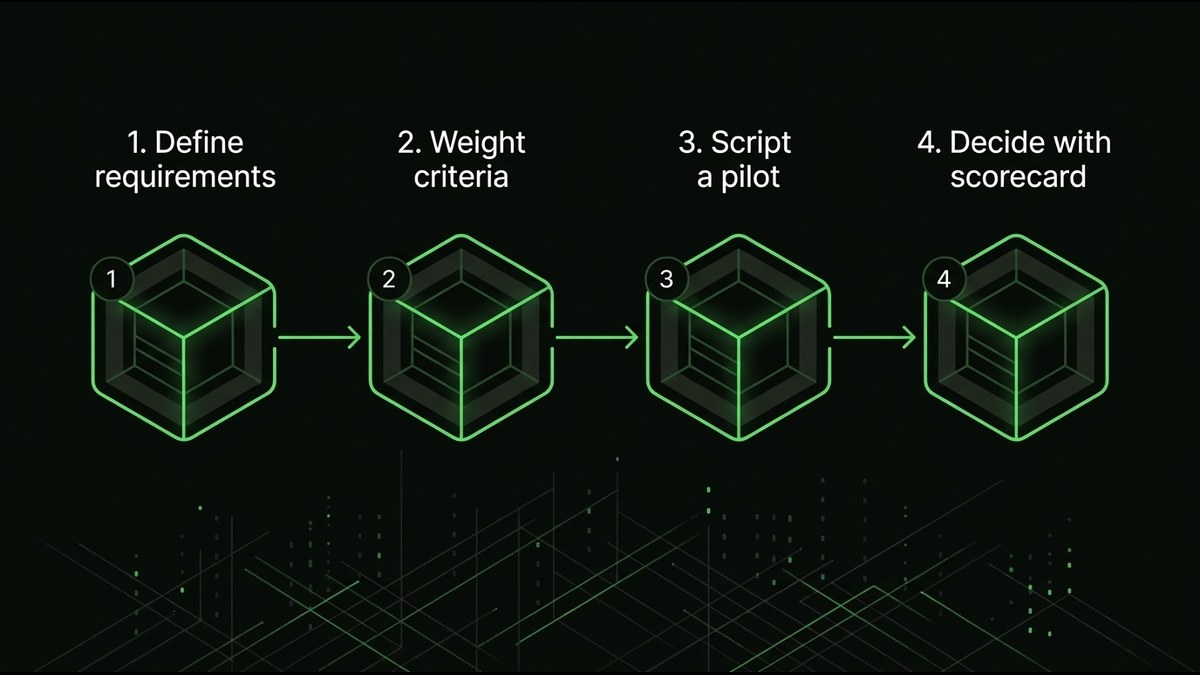
- Define requirements from your sales motion and ICP. Write down how deals really move from first touch to closed-won, who answers for the revenue number, and where efficiency or attribution is under pressure. Then check your ICP against closed-won data, because the CRM shows who actually buys. For teams selling into B2B tech, SaaS, fintech, industrial services or professional services across the US and UK, that mix often differs from the one in the plan. Build requirements from the real pattern.
- Weight the criteria before demos. Agree in writing on what matters and how much. Do it before any vendor presents, or the best presenter wins.
- Shortlist and script a pilot. Cut the field to two or three platforms. Load your own messy data and run the same script on each.
- Decide with a scorecard. Score every platform on the same criteria, with evidence, and record the reasons. You will need them when the CRO and CFO ask why this system and not another.
Why do CRM feature comparisons fail RevOps teams?
Almost every mainstream CRM can check the same feature boxes. Features don't predict whether a platform fits your data model, your reporting needs or your team's capacity to maintain it. Those factors decide success, which is why CRM selection for B2B SaaS can't stop at a grid. Three things make feature grids misleading: feature parity, demo bias, and the automation trap.
The data-debt problem also survives migration. Duplicate contacts, unmapped deal stages and disconnected marketing and sales workflows don't stay behind in the old system. They travel with the export. A few months later the reports are unreliable again, and leadership still doesn't believe them.
For B2B SaaS RevOps teams, the CRM problem is rarely the platform. It is the data model and the lack of an owner. Rebuilding the infrastructure from the ground up fixes that. A new logo on the login page doesn't.
The usual objection is, "But this platform has the features we need." That is probably true, and it isn't the question. The question is whether the platform can hold your objects, your stages and your reporting in a form your team can maintain. Peer reviews help here. Gartner's CRM reviews (2026) rate vendors on deployment and support experience as well as product capabilities, which is the part a feature grid leaves out.
- Feature parity. Contacts, deals, workflows, dashboards, forecasting. Every vendor says yes, so the grid can't separate them.
- Demo bias. A demo runs on clean sample data along a rehearsed path. Your data has duplicates, half-mapped stages and records no one owns.
- The automation trap. A new CRM wired to a broken process runs the broken process faster.
What CRM selection criteria matter beyond features?
Five criteria matter most: data model fit, integration depth with product and billing systems, reporting and attribution integrity, admin ownership and governance, and total cost of ownership across years one to three. These five are the core of CRM selection for B2B SaaS. Each one below gets a test and a red flag.
Scope integrations before you sign, not after. Attribution also starts upstream of the CRM, so a pipeline-ready GA4 measurement plan helps make sure source and campaign data reach the record that sales and finance will actually read. Good reporting is designed, not discovered.
- Data model fit. Your CRM has to represent how you actually sell. Objects, deal stages, account hierarchy, and subscription or usage data all need a proper home, or your team will invent one in spreadsheets. Test: during the pilot, map your real deal stages, a parent and child account, and a renewal, and check that closed-won records can answer who actually buys, by industry and region. Red flag: the vendor answers every modeling question with a workaround, or core concepts end up in custom fields scattered across objects.
- Integration depth. A CRM is only as useful as the signals feeding it. Product usage, billing, support and marketing automation all need to reach the account record without manual steps. Test: trace one lead from form fill to closed-won across systems, then trace one customer from a billing event back to the account. Red flag: key syncs run one way, or depend on a connector nobody owns.
- Reporting and attribution integrity. The platform must answer the CRO's pipeline questions without spreadsheet patches. If a board-level report needs a manual export every month, the CRM has handed its job back to a person, and sellers lose time to admin and data work instead of selling. Test: build one real board-level pipeline report inside the platform during the pilot, including source, stage conversion and forecast. Red flag: core reports need an add-on, a data warehouse or a consultant before they work.
- Admin ownership and governance. Someone must own the system. Governance covers who can change fields and workflows, which tools may write to the CRM, which values are authoritative, and who sees what. It is the control that stops a repeat of the data-debt mess. Test: name the owner before you buy, draft the change process and field definitions, and ask who approves a new property and how it is retired. Red flag: everyone is an admin, or nobody is.
- Total cost of ownership, years 1 to 3. License price is the smallest honest number. The full cost includes admin time, connectors, add-ons for reporting, enablement, and the risk of a second rebuild. Test: model three years, not one, including the cost of running the platform and the cost of leaving it. Red flag: a low year-one price that requires paid extras before core reporting works.
How do you evaluate CRM implementation readiness?
Check whether you have clean source data, mapped deal stages, a named system owner and an agreed definition of pipeline. If any are missing, fix them first. Otherwise any CRM will inherit the mess.
Treat readiness as a gate before go-live, not a project you plan to finish afterward. Implementation readiness is the part of CRM selection for B2B SaaS that most comparison pieces skip.
The integration inventory matters more than it sounds. Heavy tag manager and CRM script loading can drag page speed scores down even when the website itself is sound. Server-side tagging is a clean fix, but only if you know what is firing and why. A Google Tag Manager implementation audit is a practical way to list every tag before go-live. You can't govern what you haven't listed.
We build this as direct technical implementation: systems configured inside the tools that run revenue, then handed to the team that owns them. If the gate fails, fix the systems first. A scoped, fixed-price systems build is one way to do that before you migrate. When your team lacks capacity and HubSpot is on the shortlist, a HubSpot implementation agency can configure the CRM architecture to your funnel and hand it over with documentation, not leave it as a black box.
After go-live, the risk shifts to drift. Fields multiply, owners change and reports quietly diverge. Ongoing CRM hygiene, reporting and enablement, the work a HubSpot management agency takes on for HubSpot teams, keep the data model honest once the project team has left.
Test the vendor side of readiness too. Ask for reference customers with data complexity similar to yours. Find out what their implementation took, who supported it, and how the vendor behaved after the contract was signed.
Readiness also sets the success test. Six months in, the system should be steadier, results should trace back to their source, and your reliance on a patchwork of vendors should be smaller. Judge the trend, not one good month.
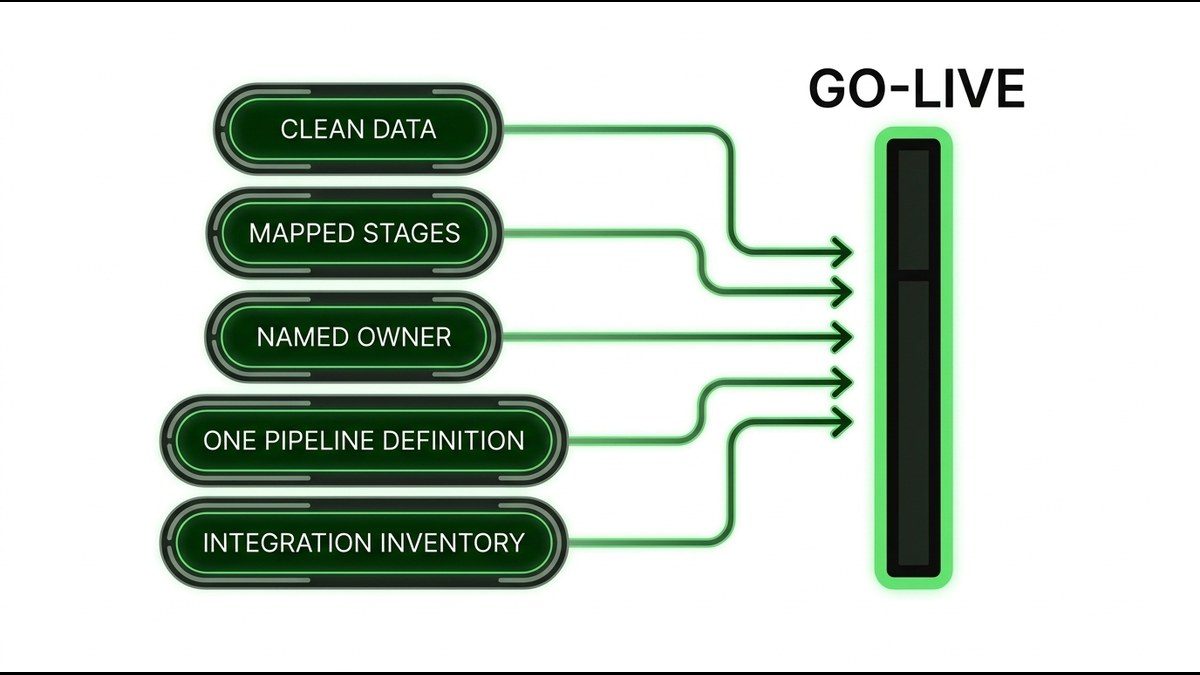
- Source-data cleanliness. Duplicates merged, ownerless records assigned or retired.
- Mapped lifecycle and deal stages. Every stage has an entry rule, an exit rule and a definition that sales and marketing both accept.
- A named owner. One person answers for configuration, access and change.
- One definition of pipeline. Finance, sales and marketing count the same thing.
- An integration inventory. Every system that reads from or writes to the CRM, including tracking scripts.
How do you compare CRM platforms fairly?
Score every shortlisted platform against the same weighted criteria, using a scripted pilot on your own data. Set the weights before demos so the best presenter doesn't win. That is what separates a real platform comparison from a vendor-led one, and it is what keeps CRM selection for B2B SaaS defensible in front of the CFO.
Adjust the weights to your motion, but lock them before the first demo. If your team will inherit a messy data model, move data model fit and governance up. If your sellers live in the product-usage data, move integration depth up. If your sales motion isn't written down yet, document it first.
Platforms also fall into archetypes. Use fit conditions, not rankings. An all-in-one suite fits teams that want marketing, sales and service data in one place and have limited admin capacity; test how far the shared data model bends before you need custom objects. A highly configurable enterprise platform fits complex account hierarchies, multiple products or heavy compliance needs, and teams with a dedicated admin; test the ongoing cost of that configurability. A lightweight sales-led CRM fits small teams with a simple motion who will add reporting and marketing automation later; test where the ceiling is and what leaving it costs.
If you are searching for an alternative to your current CRM, the same evaluation applies. Score the incumbent on it as well. Sometimes the honest result is a rebuild of the data model, not a new platform.
Then run the pilot script on every finalist. Use 10 real deals, including stalled, multi-threaded and renewal deals, not only clean wins. Use your messiest 500 contacts, with duplicates, missing fields and mixed sources. Build one real board-level report end to end in the platform.
Peer reviews belong at the shortlist stage. Browse Gartner's CRM market reviews (2026) to build a field of two or three candidates, then let your own pilot pick the winner.
- Data model fit. Weight: highest. Strong score: your stages, hierarchy and subscription data fit without custom workarounds.
- Integration depth. Weight: high. Strong score: product, billing, support and marketing data sync reliably, and a named person owns each connection.
- Reporting and attribution integrity. Weight: high. Strong score: the board-level report builds in the platform with no spreadsheet patch.
- Admin ownership and governance. Weight: medium to high. Strong score: permissions, change control and field definitions can be enforced by one owner.
- Total cost of ownership. Weight: medium. Strong score: the three-year cost is known, including connectors, add-ons and admin time.
What should you do before the next demo?
Run the readiness checklist first. It takes less time than another vendor call and tells you whether any CRM will work for you. Then set your weights, script the pilot and score each platform against the same evidence.
The argument of this guide is simple. Features are table stakes. A CRM succeeds when its data model fits your revenue process, its reporting tells the truth, and someone owns it. CRM selection for B2B SaaS is where that gets decided, long before implementation begins. Before you book another demo, get the system diagnosed.
- ✓ Choose the process first, and the platform becomes a measurable test instead of a matter of taste.
- ✓ Feature parity makes grids useless, so test data model fit, ownership and upkeep instead.
- ✓ Judge a CRM on whether it fits your data, connects to your systems, reports truthfully, has an owner and stays affordable over three years.
- ✓ Make readiness a gate before go-live, because a CRM can only be as clean as the process and data you bring to it.
- ✓ Set scorecard weights before demos and run the same pilot on your own messy data for every finalist.
FAQ
How do you choose a B2B SaaS CRM?+
Start from your sales motion and your data, not the vendor's feature list. Define requirements from your ICP and deal stages, weight the criteria in writing before demos, shortlist two or three platforms, pilot them on your own records, and decide with a scorecard.
Why don't CRM feature comparisons work?+
Almost every mainstream CRM checks the same feature boxes, so a grid can't separate them. Demos also run on clean sample data, while your real data has duplicates and unowned records. Fit with your data model, reporting needs and team capacity decides success, and a feature list doesn't measure those.
What criteria matter most when selecting a CRM beyond features?+
Five criteria matter most: data model fit, integration depth with product and billing systems, reporting and attribution integrity, admin ownership and governance, and total cost of ownership across years one to three.
How do you know if you are ready to implement a new CRM?+
You need clean source data, mapped lifecycle and deal stages, a named system owner, one agreed definition of pipeline, and an inventory of every system that reads from or writes to the CRM. If any are missing, fix them first, or the new CRM will inherit the mess.
How should you pilot CRM platforms before buying?+
Run the same script on every finalist: 10 real deals including stalled, multi-threaded and renewal deals, your messiest 500 contacts, and one real board-level pipeline report built end to end inside the platform.
Will switching CRMs fix unreliable pipeline reports?+
Not by itself. Duplicate contacts, unmapped deal stages and disconnected marketing and sales workflows travel with the export, so reports become unreliable again within months. The fix is a sound data model and a named owner, not a new logo on the login page.
Sources
- [1]Gartner's CRM reviews rate vendors on deployment and support experience as well as product capabilities. Gartner, Gartner CRM market reviews, 2026.