Most MSP service pages sound the same because they share one template: a list of services, a row of reassuring adjectives, and a generic contact form. To write yours, name the buyer and market you serve, explain how you charge, and put proof next to the call to action.
A buyer opens five tabs. Every page lists the same services, uses the same adjectives and ends in the same contact form.
Sameness is a writing decision, not a category law. Teams write the copy before they decide the offer, so the page describes a category instead of a company. The fix starts earlier than the copy. It is the same discipline behind content marketing that starts from buyer intent.
We do not run MSP campaigns. The mechanism here applies to any technical, multi-stakeholder B2B service page, and that is the lens we use below.
Why do MSP service pages sound alike?
They copy each other. Teams start from a competitor's page, keep the same sections, and fill them with words every rival also uses. The result describes a category, not a company, so a buyer comparing options has nothing to separate them on.
Look at what competing pages in this space tend to lead with: client counts, review ratings, data volumes and "AI-powered" claims. These prove scale. They do not prove fit. A buyer with a specific environment, a specific risk and a specific budget logic cannot tell from a client count whether the provider understands their situation.
The sameness is a symptom. The copy was written before anyone decided who the page was for, what it would charge for, or what single action it should drive. A template fills that vacuum. Every team that skips the decision ends up with the same page.
Sales feels it first. When the page does not separate the company from its rivals, reps re-explain the offer on every call. The page was meant to do that work before the call.
What should MSP service pages say differently?
Three things. Who the service is for and in which market, how the fee is built and what drives it, and proof placed beside the call to action. Each is specific and checkable, which is what makes a claim credible and lets AI answer engines lift it.
Name the buyer and the market. "Managed services for growing businesses" fits everyone, so it informs no one. Name the buyer's role, the size of company, the sector and the problem they bring. A page that says who it is for tells everyone else they can stop reading. That is a feature. The right reader now trusts the page more.
Open with what becomes possible for that buyer. Then explain the mechanism that delivers it. Concrete claims can be checked, and so they can be believed. Superlatives can be neither.
Explain the fee. This is the most skipped section and the most differentiating one. You do not need to publish a price. You do need to say what drives it, what is fixed, and what changes the scope.
A buyer comparing five providers is trying to work out which quote will surprise them. A page that explains its fee logic answers that worry before the first call. It also filters out buyers who want a different commercial model, which saves your sales team time. Fixed scope and fixed price are easy to state plainly. Open-ended scope is not.
Put proof next to the CTA. Most pages park proof in a logo strip three screens away from the action. The buyer decides at the button, not at the footer. Place a named customer and a specific outcome right beside the call to action. Anonymous praise carries no weight. Named customers and specific outcomes do.
If you have client results, show them where the decision happens.
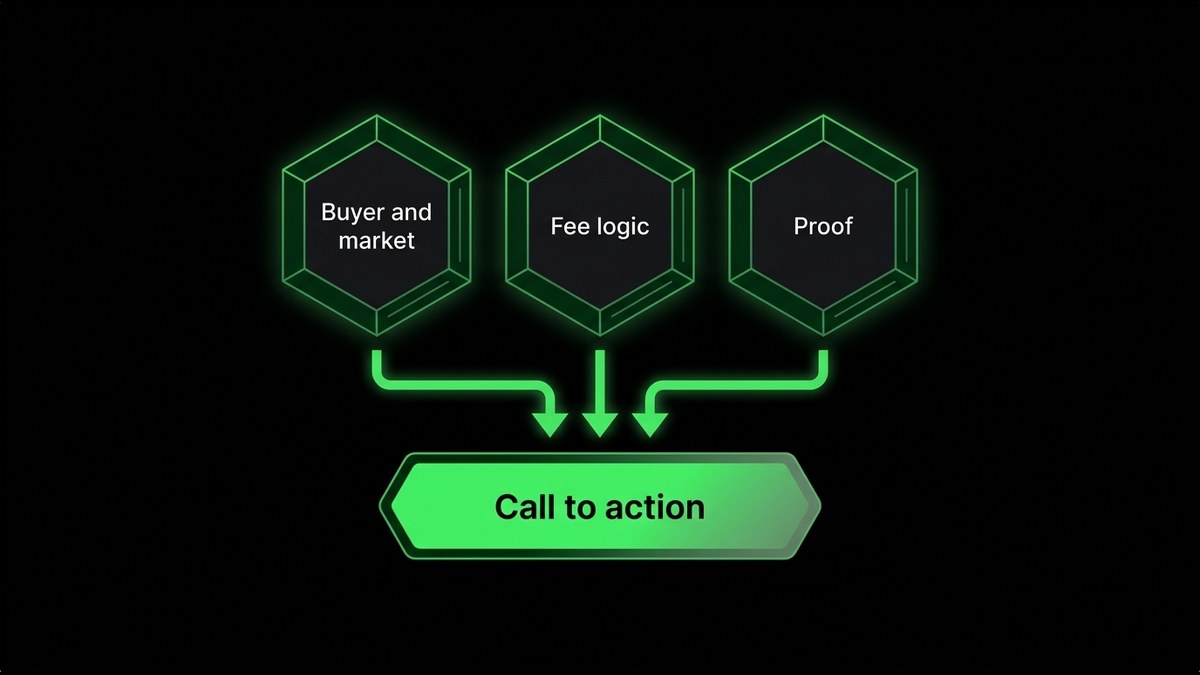
- Name the buyer and the market. State the buyer's role, company size, sector and problem so the right reader trusts the page and others self-select out.
- Explain the fee. Say what drives the price, what is fixed and what changes scope, even if you do not publish a number.
- Put proof next to the CTA. Place a named customer and a specific outcome beside the button, where the decision happens.
Which words should MSP service pages cut?
Cut the vocabulary every competitor shares: "seamless," "robust," "solutions," "leading," "best-in-class." These words feel like copy but carry no information. Replace each with the concrete claim underneath: what the service does, for whom, and what changes.
In our work on B2B copy, the words every competitor uses carry no information, and cutting them forces the concrete claim underneath to surface. The edit is a diagnostic as much as a style pass. If you delete the adjective and nothing is left, there was never a claim.
Two more rules make the editing pass faster. Keep technical precision, but aim it at the buyer's outcome, not your architecture. Technical buyers want to know what changes for them, not how the system is built.
Here is a generic before and after for a technical service. Before: "Best-in-class managed backup for businesses of every size." After: "Managed backup for regional accounting firms. Systems return to a working state the same business day. Price follows seat count and number of sites."
The second version names a buyer, a result and a fee driver. A competitor cannot publish it unchanged.
- Write headings that carry the argument alone. Most readers scan before they read. A heading like "Our Approach" says nothing. A heading that states a claim does the work for a skimmer.
- Make every claim self-contained. A specific sentence works when lifted out of the page. Human skimmers and AI answer engines both reward that.
How many jobs should MSP service pages do?
One. A service page that explains the company, describes the service, captures a lead and reassures a sceptic does all four badly. Pick the single action, then subordinate everything else to it.
That decision happens before any design work, and it is the one most teams skip. Pages that convert pick one action. Everything else on the page either supports it or gets removed.
This is also where the page connects to a sales-led motion. If the page does not do one job, your reps end up doing the others on every call.
Underperforming pages usually leak rather than fail to impress. Each of these hands the visitor a way out:
Paid traffic should rarely land on a homepage. The visitor clicked on a specific promise, and a homepage serves too many intents to honour it. A dedicated page that continues the promise almost always does better.
Test headline and offer before visual treatment, because that is where the movement is. Once the message is settled, a build that loads fast and that your team can edit keeps the page from leaking. That is the case for Webflow builds your team can own.
- Competing calls to action
- Full site navigation
- Long forms that ask for more than the first step needs
- Slow load times
- A headline that does not match the ad or search that brought the visitor
How do you test MSP service page originality?
Cover the logo and read the headline, first paragraph and call to action. If a competitor could publish them unchanged, the page is templated. Rewrite until every heading makes a claim only your company can make.
Run it as a four-line checklist before you spend on a rebuild. Any "no" tells you where to start. This is diagnosis before delivery. It costs an hour, and it stops you from redesigning a page whose real problem is the offer.
Then measure. Know which page produces pipeline, not just which one draws visits. Pages that read well but never show up in revenue data are still guesses. That is the job of an outsourced RevOps function that tracks which pages produce revenue, and the same logic runs through our RevOps approach to pipeline reporting.

- Does the headline name a buyer and a market?
- Does the page explain what drives the fee?
- Is named proof beside the call to action?
- Is there exactly one action on the page?
The fix in two sentences
MSP service pages sound the same because the copy is written before the offer is decided. Name the buyer and market, explain the fee, and put proof beside the single action, and the page gives a comparing buyer something to separate options on.
If you own these pages and want a diagnosis before you rewrite anything, that is the next step.
- ✓ Templated pages come from copy written before the offer was decided.
- ✓ Name the buyer, explain the fee, and put named proof where the decision happens.
- ✓ Cut the shared words and the concrete claim underneath has to surface.
- ✓ Choose one action first, then close every exit that competes with it.
- ✓ Run the cover-the-logo test first, then tie each page to pipeline.
FAQ
Why do MSP service pages sound the same?+
They share one template and copy competitors' sections and vocabulary. The copy is written before anyone decides who the page is for, what it charges for, or what single action it should drive, so the page describes a category instead of a company.
Do I have to publish prices on an MSP service page?+
No. You do need to explain what drives the fee, what is fixed, and what changes the scope. That answers a comparing buyer's worry about being surprised by a quote and filters out buyers who want a different commercial model.
Where should proof go on a service page?+
Right beside the call to action, because the buyer decides at the button, not at the footer. Use a named customer and a specific outcome. Anonymous praise carries no weight.
Which words should a service page cut?+
Cut vocabulary every competitor shares, such as "seamless," "robust," "solutions," "leading" and "best-in-class." Replace each with the concrete claim underneath: what the service does, for whom, and what changes. If nothing is left after deleting the adjective, there was never a claim.
How do I check whether my service page is templated?+
Cover the logo and read the headline, first paragraph and call to action. If a competitor could publish them unchanged, the page is templated. Then check that the headline names a buyer and market, the fee logic is explained, named proof sits beside the call to action, and the page has exactly one action.